

Student Success & The Northern Experience
Mining Engineering Technicians are involved in every aspect of mining, from exploration to extraction. Our program is taught by experienced and passionate instructors, providing a combination of theory and hands-on, applied learning opportunities. The program is carefully designed to ensure all curriculum, skills, and experiences are fully covered.
Does this program sound like a good fit for you?
Connect with us to learn more.
Course Information
Semester 1
In this course, students will learn essential skills for success in college and the workplace. This course focuses on developing and strengthening oral and written communication skills, and critical thinking ability. During this course, students will engage in a variety of forms of communication with a focus on upholding the principles of academic integrity. Students will develop the skills necessary to create discipline-specific documents, practice business etiquette and professionalism, and apply critical thinking strategies to practical scenarios. Upon successful completion of this course, students will be able to plan and draft concise, coherent and well-organized writing assignments that are tailored to specific audiences and purposes.
42 hours
This course introduces the student to health and safety in their home, in society and within an occupational setting. Students learn about the social and personal benefits of safe work practices and the methods to best prevent accidents or injuries. Students will review the role, right and responsibilities of an individual in today’s health and safety conscious world. Students also learn how to read and interpret the Occupational Act and Regulations.
42 Hours
In this course, students will gain practical experience with Microsoft Excel for Windows. Excel will be used to prepare various reports, presentations, and applications that directly align with the critical-thinking requirements of the workplace. Students will gain practical experience working with formulas and functions, developing and enhancing financial reports, organizing data with charts, data lists, and tables, managing multiple worksheets, workbooks, and external data sources, developing macros, using conditional functions, working with financial tools and functions, and performing what-if analysis.
42 Hours
This is an introductory course designed to teach students the basics of using the AutoCAD drafting software to create 2 dimensional drawings. Lessons include using the draw, modify, layering and annotation commands.
56 Hours
This course covers basic algebra properties, graphing the straight line, basic geometry and trigonometry, and solving a system of equations graphically and algebraically. It also covers vector addition by components and by the cosine and sine laws.
56 Hours
Students prepare for the fieldwork co-op placement by identifying specific competencies and requirements for the placement, reviewing the Fieldwork Placement Manual, and examining his/her role in relation to field placement expectations. Policies, processes, roles, responsibilities, and expectations relating to fieldwork placement will be discussed. This course will introduce the student to the concept of reflective practice and professional development. This course will help the student clarify his/her expectations and prepare for a successful fieldwork placement experience.
14 Hours
This course is an introduction to the basic principles of Plane Surveying. The theory and use of GPS, total stations, steel tapes, and levels will be covered. Basic surveying calculations for direction, coordinates and area will be included.
42 Hours
Explore the foundational principles of mineralogy and geology essential to mining. Develop the skills to identify and classify minerals using specialized methods. Learn to identify igneous, sedimentary, and metamorphic types, and the processes involved in their formation. Build knowledge of key geological concepts, including plate tectonics, geological time and structures. Throughout the course, emphasis is placed on accurate observation, testing, and interpretation to support effective exploration and mine planning.
42 Hours
In this course, students will learn essential skills for success in college and the workplace. This course focuses on developing and strengthening oral and written communication skills, and critical thinking ability. During this course, students will engage in a variety of forms of communication with a focus on upholding the principles of academic integrity. Students will develop the skills necessary to create discipline-specific documents, practice business etiquette and professionalism, and apply critical thinking strategies to practical scenarios. Upon successful completion of this course, students will be able to plan and draft concise, coherent and well-organized writing assignments that are tailored to specific audiences and purposes.
42 hours
This course introduces the student to health and safety in their home, in society and within an occupational setting. Students learn about the social and personal benefits of safe work practices and the methods to best prevent accidents or injuries. Students will review the role, right and responsibilities of an individual in today’s health and safety conscious world. Students also learn how to read and interpret the Occupational Act and Regulations.
42 Hours
In this course, students will gain practical experience with Microsoft Excel for Windows. Excel will be used to prepare various reports, presentations, and applications that directly align with the critical-thinking requirements of the workplace. Students will gain practical experience working with formulas and functions, developing and enhancing financial reports, organizing data with charts, data lists, and tables, managing multiple worksheets, workbooks, and external data sources, developing macros, using conditional functions, working with financial tools and functions, and performing what-if analysis.
42 Hours
This is an introductory course designed to teach students the basics of using the AutoCAD drafting software to create 2 dimensional drawings. Lessons include using the draw, modify, layering and annotation commands.
56 Hours
This course covers basic algebra properties, graphing the straight line, basic geometry and trigonometry, and solving a system of equations graphically and algebraically. It also covers vector addition by components and by the cosine and sine laws.
56 Hours
Students prepare for the fieldwork co-op placement by identifying specific competencies and requirements for the placement, reviewing the Fieldwork Placement Manual, and examining his/her role in relation to field placement expectations. Policies, processes, roles, responsibilities, and expectations relating to fieldwork placement will be discussed. This course will introduce the student to the concept of reflective practice and professional development. This course will help the student clarify his/her expectations and prepare for a successful fieldwork placement experience.
14 Hours
This course is an introduction to the basic principles of Plane Surveying. The theory and use of GPS, total stations, steel tapes, and levels will be covered. Basic surveying calculations for direction, coordinates and area will be included.
42 Hours
Explore the foundational principles of mineralogy and geology essential to mining. Develop the skills to identify and classify minerals using specialized methods. Learn to identify igneous, sedimentary, and metamorphic types, and the processes involved in their formation. Build knowledge of key geological concepts, including plate tectonics, geological time and structures. Throughout the course, emphasis is placed on accurate observation, testing, and interpretation to support effective exploration and mine planning.
42 Hours
Semester 2
This is a course in general chemistry designed to provide a fundamental background for students to understand chemical concepts and to appreciate the applications and implications of chemistry in technology and society.
42 Hours
In this course, students will develop professional communication skills required for success in the workplace. Students will continue to develop and strengthen their oral and written communication skills and critical thinking abilities. During this course, students will use various modes of communication to complete assignments designed to meet program and professional expectations. Students will utilize a variety of technologies for the purpose of creating a professional presence in a digital environment. Students will develop the necessary skills to create polished workplace documents such as letters, resumes, cover letters and reports tailored to specific audiences. Students will learn to conduct themselves with professionalism in both workplace interviews and job searches. Upon successful completion of this course, students will be able to create clear, concise and coherent workplace and employment documents that are error-free and designed for specific audiences and purposes.
42 Hours
This course covers foundational understanding of how mining and mineral exploration activities interact with the natural environment, and the skills required to monitor and manage those impacts responsibly. Learn how to collect, analyze, and document environmental data related to water quality, air and dust emissions, waste rock, and site conditions using industry‑standard sampling techniques and monitoring tools. Explore regulatory requirements, permitting considerations, and environmental management systems that guide modern mining and mineral exploration operations. Emphasis is placed on applying environmental monitoring results to support compliance, inform operational decision‑making, including Indigenous community consultation, and contribute to sustainable resource development throughout the mining cycle.
42 hours
Explore the fundamentals of geospatial technology and its applications in mining and resource management. Gain a solid understanding of GIS concepts, terminology, and the role of spatial data. Learn to create, manage, and analyze data using GIS tools, and examine database systems, data modelling, and digital mapping techniques. Discover how drones are used for surveying and monitoring, including flight principles, safety regulations, and hands-on operation. Dive into LiDAR technology to collect, process, and visualize high-resolution data for creating 3D maps, elevation models, and environmental assessments. This course blends theory with practical skills to prepare you for modern geospatial workflows.
42 hours
MA2104 is the second course in the math stream for students in an Engineering Technician / Technology program. The emphasis of this course is on solving equations relating to quadratics, logarithms, exponentials, with sections on factoring, fractional equations, manipulating exponent and radical expressions, and complex numbers, and for some programs studying systems of linear equations and determinants. Applications of the basic concepts to particular fields of study will be covered. The second semester Mathematics course is designed to give the student the mathematical tools required to function in his/her special field of study. Students are encouraged to seek help after class hours if problems are encountered in the course. Every effort will be made to identify problem areas for the student, but in the final analysis, it is the responsibility of the student to ask for help.
56 Hours
Explore the fundamentals of automation and instrumentation systems that drive modern mining operations. Learn to interpret and operate equipment used to measure and control process parameters for accuracy and efficiency. Develop skills in identifying and troubleshooting system components while following safety and technical specifications. Gain hands-on experience operating and adjusting electronic and computer-based controllers to optimize performance, and understand both wired and wireless automation components. You’ll also prepare and analyze documentation, technical reports, and drawings that meet industry standards, building a strong foundation for integrating automation into mining processes.
56 hours
Introduces the principles and practices used to understand how economically important mineral deposits form, are distributed, and can be identified in the field. Students will learn to recognize common ore and gangue minerals and explore the geological processes that create and modify mineral deposits. Emphasis is placed on major ore deposit models, including their key characteristics, diagnostic features, and exploration significance.
42 hours
Explore practical and theoretical aspects of surface mining operations, focusing on blasting, ground control, and ventilation systems. Design and optimize drill and blast packages, manage explosives inventory, and conduct QA/QC audits for safe blasting practices. Learn ground control techniques such as mapping, applying support standards, installing instruments, and modeling mining stresses. Gain hands-on experience in monitoring, troubleshooting, and optimization while emphasizing safety, regulatory compliance, and technical reporting.
42 Hours
This is a course in general chemistry designed to provide a fundamental background for students to understand chemical concepts and to appreciate the applications and implications of chemistry in technology and society.
42 Hours
In this course, students will develop professional communication skills required for success in the workplace. Students will continue to develop and strengthen their oral and written communication skills and critical thinking abilities. During this course, students will use various modes of communication to complete assignments designed to meet program and professional expectations. Students will utilize a variety of technologies for the purpose of creating a professional presence in a digital environment. Students will develop the necessary skills to create polished workplace documents such as letters, resumes, cover letters and reports tailored to specific audiences. Students will learn to conduct themselves with professionalism in both workplace interviews and job searches. Upon successful completion of this course, students will be able to create clear, concise and coherent workplace and employment documents that are error-free and designed for specific audiences and purposes.
42 Hours
This course covers foundational understanding of how mining and mineral exploration activities interact with the natural environment, and the skills required to monitor and manage those impacts responsibly. Learn how to collect, analyze, and document environmental data related to water quality, air and dust emissions, waste rock, and site conditions using industry‑standard sampling techniques and monitoring tools. Explore regulatory requirements, permitting considerations, and environmental management systems that guide modern mining and mineral exploration operations. Emphasis is placed on applying environmental monitoring results to support compliance, inform operational decision‑making, including Indigenous community consultation, and contribute to sustainable resource development throughout the mining cycle.
42 hours
Explore the fundamentals of geospatial technology and its applications in mining and resource management. Gain a solid understanding of GIS concepts, terminology, and the role of spatial data. Learn to create, manage, and analyze data using GIS tools, and examine database systems, data modelling, and digital mapping techniques. Discover how drones are used for surveying and monitoring, including flight principles, safety regulations, and hands-on operation. Dive into LiDAR technology to collect, process, and visualize high-resolution data for creating 3D maps, elevation models, and environmental assessments. This course blends theory with practical skills to prepare you for modern geospatial workflows.
42 hours
MA2104 is the second course in the math stream for students in an Engineering Technician / Technology program. The emphasis of this course is on solving equations relating to quadratics, logarithms, exponentials, with sections on factoring, fractional equations, manipulating exponent and radical expressions, and complex numbers, and for some programs studying systems of linear equations and determinants. Applications of the basic concepts to particular fields of study will be covered. The second semester Mathematics course is designed to give the student the mathematical tools required to function in his/her special field of study. Students are encouraged to seek help after class hours if problems are encountered in the course. Every effort will be made to identify problem areas for the student, but in the final analysis, it is the responsibility of the student to ask for help.
56 Hours
Explore the fundamentals of automation and instrumentation systems that drive modern mining operations. Learn to interpret and operate equipment used to measure and control process parameters for accuracy and efficiency. Develop skills in identifying and troubleshooting system components while following safety and technical specifications. Gain hands-on experience operating and adjusting electronic and computer-based controllers to optimize performance, and understand both wired and wireless automation components. You’ll also prepare and analyze documentation, technical reports, and drawings that meet industry standards, building a strong foundation for integrating automation into mining processes.
56 hours
Introduces the principles and practices used to understand how economically important mineral deposits form, are distributed, and can be identified in the field. Students will learn to recognize common ore and gangue minerals and explore the geological processes that create and modify mineral deposits. Emphasis is placed on major ore deposit models, including their key characteristics, diagnostic features, and exploration significance.
42 hours
Explore practical and theoretical aspects of surface mining operations, focusing on blasting, ground control, and ventilation systems. Design and optimize drill and blast packages, manage explosives inventory, and conduct QA/QC audits for safe blasting practices. Learn ground control techniques such as mapping, applying support standards, installing instruments, and modeling mining stresses. Gain hands-on experience in monitoring, troubleshooting, and optimization while emphasizing safety, regulatory compliance, and technical reporting.
42 Hours
Semester 3
MI3063 Co-op
420 hours
MI3063 Co-op
420 hours
Semester 4
General Education Courses are selected online each semester by the student from a list provided and exposes students to a related area of study outside of their immediate academic discipline. Certain programs have predetermined electives.
42 Hours
Improving your knowledge and understanding of the history of the Indigenous peoples of what we now call Canada is an important step to enable Indigenous and non-Indigenous people, organizations, and communities to work together more respectfully. Throughout this course you will have the opportunity to learn, discuss and reflect about many topics that are relevant in the learning journey towards reconciliation.
42 Hours
MA3033 focuses on additional topics in algebra, geometry and trigonometry. Applications from many fields of technology are explored to show where and how mathematical techniques are used in the real world. Emphasis is placed on doing mathematics.
The learner is expected to apply time and effort to understanding the basic concepts. The learner is also expected to apply time and effort in demonstrating acquired knowledge by solving basic word problems involving technical applications. Using mathematics effectively in everyday situations requires the ability to apply a wide variety of mathematical skills accurately.
Students who successfully complete this course will have demonstrated their ability to apply the concepts of number and space to situations which include quantities, magnitudes, measurements, and ratios. They will have developed their ability to identify the need for mathematics, to apply mathematical techniques (concepts, conventions, strategies, and operations) and to check the results of their analyses. This will require flexibility, creativity and confidence, which can only be gained through practice.
56 hours
Discover the essential processes that transform raw ore into valuable products. This foundational introduction to the key physical and chemical processes used to extract and upgrade valuable minerals from ore. Exploring the fundamental unit operations of comminution, classification, gravity separation, magnetic separation, flotation, and dewatering, gaining an understanding of how each stage contributes to overall plant performance. Operate bench‑scale crushers, mills, classifiers, flotation cells, and filtration equipment to observe process behavior, measure performance variables, and analyze material responses. Emphasis is placed on safety, equipment function, flowsheet concepts, and developing the practical skills necessary to support mineral processing activities in mining operations.
56 hours
Discover the technical skills needed for safe and efficient underground mining operations. Work on designing drill and blast packages, managing explosives inventory, and conducting QA/QC audits. Practice ground control through mapping, applying support standards, and modeling mining stresses. Learn ventilation techniques including airflow measurement, air quality assessment, and infrastructure inspection. Build proficiency in troubleshooting, technical reporting, and optimization to prepare for critical roles in modern underground mining.
42 hours
Explore geological and mine mapping techniques for surface and underground environments. Map underground faces, backs, walls, and development headings, as well as open pit walls and benches. Collect grade control samples, conduct bedrock mapping, and document observations through notes, sketches, and photographs. Assist in reconciling geological models with mined geology and setting up underground drill holes. Focus on accuracy, detail, and systematic recording to support effective mine planning and resource management.
42 hours
This course builds essential skills for effective geological sampling in exploration and resource evaluation. It covers designing and prioritizing sampling schedules, collecting representative samples from trenches, outcrops, drill holes, and stockpiles, and organizing geophysical and geochemical data. Training includes industry-standard QA/QC practices and hands-on work with drill core—maintaining orientation, photographing core, assessing recovery and RQD, preparing samples for assay, and documenting observations to NI 43-101 standards. Emphasis is placed on precision, consistency, and systematic recording to ensure high-quality geological data.
42 hours
Mine Planning and Development introduces the fundamental principles, tools, and processes for designing and advancing both surface and underground mining operations. The course explores how geological information, survey data, ground control requirements, and production objectives are translated into practical mine layouts, development headings, stope designs, and short-term schedules. Learners develop skills in interpreting engineering drawings, creating basic operational plans, and updating planning databases while learning how ventilation, dewatering, and backfill systems influence mine design. Emphasis is placed on integrating safety standards, regulatory requirements, and operational constraints into planning decisions, as well as understanding how daily, weekly, and monthly mine plans support efficient, safe, and sustainable resource extraction throughout the mining cycle.
42 hours
General Education Courses are selected online each semester by the student from a list provided and exposes students to a related area of study outside of their immediate academic discipline. Certain programs have predetermined electives.
42 Hours
Improving your knowledge and understanding of the history of the Indigenous peoples of what we now call Canada is an important step to enable Indigenous and non-Indigenous people, organizations, and communities to work together more respectfully. Throughout this course you will have the opportunity to learn, discuss and reflect about many topics that are relevant in the learning journey towards reconciliation.
42 Hours
MA3033 focuses on additional topics in algebra, geometry and trigonometry. Applications from many fields of technology are explored to show where and how mathematical techniques are used in the real world. Emphasis is placed on doing mathematics.
The learner is expected to apply time and effort to understanding the basic concepts. The learner is also expected to apply time and effort in demonstrating acquired knowledge by solving basic word problems involving technical applications. Using mathematics effectively in everyday situations requires the ability to apply a wide variety of mathematical skills accurately.
Students who successfully complete this course will have demonstrated their ability to apply the concepts of number and space to situations which include quantities, magnitudes, measurements, and ratios. They will have developed their ability to identify the need for mathematics, to apply mathematical techniques (concepts, conventions, strategies, and operations) and to check the results of their analyses. This will require flexibility, creativity and confidence, which can only be gained through practice.
56 hours
Discover the essential processes that transform raw ore into valuable products. This foundational introduction to the key physical and chemical processes used to extract and upgrade valuable minerals from ore. Exploring the fundamental unit operations of comminution, classification, gravity separation, magnetic separation, flotation, and dewatering, gaining an understanding of how each stage contributes to overall plant performance. Operate bench‑scale crushers, mills, classifiers, flotation cells, and filtration equipment to observe process behavior, measure performance variables, and analyze material responses. Emphasis is placed on safety, equipment function, flowsheet concepts, and developing the practical skills necessary to support mineral processing activities in mining operations.
56 hours
Discover the technical skills needed for safe and efficient underground mining operations. Work on designing drill and blast packages, managing explosives inventory, and conducting QA/QC audits. Practice ground control through mapping, applying support standards, and modeling mining stresses. Learn ventilation techniques including airflow measurement, air quality assessment, and infrastructure inspection. Build proficiency in troubleshooting, technical reporting, and optimization to prepare for critical roles in modern underground mining.
42 hours
Explore geological and mine mapping techniques for surface and underground environments. Map underground faces, backs, walls, and development headings, as well as open pit walls and benches. Collect grade control samples, conduct bedrock mapping, and document observations through notes, sketches, and photographs. Assist in reconciling geological models with mined geology and setting up underground drill holes. Focus on accuracy, detail, and systematic recording to support effective mine planning and resource management.
42 hours
This course builds essential skills for effective geological sampling in exploration and resource evaluation. It covers designing and prioritizing sampling schedules, collecting representative samples from trenches, outcrops, drill holes, and stockpiles, and organizing geophysical and geochemical data. Training includes industry-standard QA/QC practices and hands-on work with drill core—maintaining orientation, photographing core, assessing recovery and RQD, preparing samples for assay, and documenting observations to NI 43-101 standards. Emphasis is placed on precision, consistency, and systematic recording to ensure high-quality geological data.
42 hours
Mine Planning and Development introduces the fundamental principles, tools, and processes for designing and advancing both surface and underground mining operations. The course explores how geological information, survey data, ground control requirements, and production objectives are translated into practical mine layouts, development headings, stope designs, and short-term schedules. Learners develop skills in interpreting engineering drawings, creating basic operational plans, and updating planning databases while learning how ventilation, dewatering, and backfill systems influence mine design. Emphasis is placed on integrating safety standards, regulatory requirements, and operational constraints into planning decisions, as well as understanding how daily, weekly, and monthly mine plans support efficient, safe, and sustainable resource extraction throughout the mining cycle.
42 hours
Semester 5
General Education Courses are selected online each semester by the student from a list provided and exposes students to a related area of study outside of their immediate academic discipline. Certain programs have predetermined electives.
42 Hours
This is a basic introductory course in Calculus. Students learn the language of calculus and apply the rules to simple engineering problems. The course includes the derivative of algebraic functions with applications to trajectory motion and minimum and maximum problems. An introduction to integration, with algebraic functions, is also taught with some basic applications to area, volumes of revolution, displacement-velocity-acceleration and other applied engineering problems.
56 Hours
Mineral Processing – Unit Optimization builds on the foundational concepts from Unit Operations, advancing students’ knowledge of how mineral processing circuits are monitored, evaluated, and optimized for recovery, throughput, and efficiency. Learners analyze key performance indicators such as grind size, reagent dosage, slurry density, and mass balance results, and use these measurements to troubleshoot plant performance and recommend improvements. Students work with process data, sampling techniques, and diagnostic tools to understand how variations in feed characteristics, equipment settings, and operational conditions impact circuit behaviour. The course prepares Mining Engineering Technicians to support metallurgical evaluation, continuous improvement initiatives, and plant optimization in modern mineral processing environments.
56 hours
Drill, Blast, and Design builds on foundational blasting and ground control concepts introduced in earlier courses, such as Surface Mining and Underground Mining, and advances understanding of how drill-and-blast activities are planned, executed, and optimized in real mining environments. The course explores blast design principles, drilling patterns, explosive selection, timing systems, and quality assurance practices that influence fragmentation, ground stability, and overall operational efficiency. Through practical components, including hands-on exercises with blast design software and analysis of field data, students learn to evaluate blast performance, identify potential issues, and apply industry best practices to support safe and effective production blasting. The course prepares Mining Engineering Technician graduates to contribute confidently to drill-and-blast teams and to understand how blasting decisions impact the mining cycle.
56 hours
Through this Capstone Project gain essential skills to support and optimize mining operations. Collect and analyze production data, digitize records, and prepare performance reports. Schedule equipment and personnel, conduct time studies, and perform fragmentation analysis. Develop expertise in quality assurance and control, including inspections and documentation, while assisting with project planning, budgeting, and procurement. Focus on operational optimization and accurate reporting within a structured quality management framework.
56 hours
Mine Maintenance Planning provides a comprehensive view of how maintenance activities are organized, scheduled, and integrated across the entire mining value chain—from pit equipment and underground fleets to mineral processing plants. The course equips technicians with the contextual understanding needed to collaborate effectively with maintenance teams, supervisors, and operations personnel. Students learn how work orders are generated and prioritized, how preventive and predictive maintenance programs are developed, and how equipment downtime, parts availability, and labour resources influence production schedules. The course emphasizes interpreting maintenance data, understanding reliability principles, and recognizing how maintenance decisions impact safety, productivity, and overall operational efficiency. Upon completion, learners will be able to communicate effectively with trades and planning staff, contribute to maintenance scheduling discussions, and apply systems thinking to understand how well‑planned maintenance supports the continuity and performance of mining operations.
42 hours
Mining and Mineral Exploration Finance introduces the fundamental economic and financial concepts that guide decision-making in the mining and mineral exploration sectors. Develop an understanding of how exploration programs, mining projects, and mineral processing operations are budgeted, costed, and evaluated, with emphasis on capital versus operating costs, cash‑flow modelling, cost drivers, and the financial risks unique to the mining industry. Examine how commodity prices, market conditions, regulatory requirements, and project timelines influence financial planning throughout the mine life cycle. Learn to interpret financial statements, assess project viability, and understand how financing strategies, investment models, and economic assessments support exploration programs and operational decisions. Communicate basic financial insights, recognize the economic implications of technical decisions, and contribute to financially informed planning in mining and exploration environments.
42 hours
General Education Courses are selected online each semester by the student from a list provided and exposes students to a related area of study outside of their immediate academic discipline. Certain programs have predetermined electives.
42 Hours
This is a basic introductory course in Calculus. Students learn the language of calculus and apply the rules to simple engineering problems. The course includes the derivative of algebraic functions with applications to trajectory motion and minimum and maximum problems. An introduction to integration, with algebraic functions, is also taught with some basic applications to area, volumes of revolution, displacement-velocity-acceleration and other applied engineering problems.
56 Hours
Mineral Processing – Unit Optimization builds on the foundational concepts from Unit Operations, advancing students’ knowledge of how mineral processing circuits are monitored, evaluated, and optimized for recovery, throughput, and efficiency. Learners analyze key performance indicators such as grind size, reagent dosage, slurry density, and mass balance results, and use these measurements to troubleshoot plant performance and recommend improvements. Students work with process data, sampling techniques, and diagnostic tools to understand how variations in feed characteristics, equipment settings, and operational conditions impact circuit behaviour. The course prepares Mining Engineering Technicians to support metallurgical evaluation, continuous improvement initiatives, and plant optimization in modern mineral processing environments.
56 hours
Drill, Blast, and Design builds on foundational blasting and ground control concepts introduced in earlier courses, such as Surface Mining and Underground Mining, and advances understanding of how drill-and-blast activities are planned, executed, and optimized in real mining environments. The course explores blast design principles, drilling patterns, explosive selection, timing systems, and quality assurance practices that influence fragmentation, ground stability, and overall operational efficiency. Through practical components, including hands-on exercises with blast design software and analysis of field data, students learn to evaluate blast performance, identify potential issues, and apply industry best practices to support safe and effective production blasting. The course prepares Mining Engineering Technician graduates to contribute confidently to drill-and-blast teams and to understand how blasting decisions impact the mining cycle.
56 hours
Through this Capstone Project gain essential skills to support and optimize mining operations. Collect and analyze production data, digitize records, and prepare performance reports. Schedule equipment and personnel, conduct time studies, and perform fragmentation analysis. Develop expertise in quality assurance and control, including inspections and documentation, while assisting with project planning, budgeting, and procurement. Focus on operational optimization and accurate reporting within a structured quality management framework.
56 hours
Mine Maintenance Planning provides a comprehensive view of how maintenance activities are organized, scheduled, and integrated across the entire mining value chain—from pit equipment and underground fleets to mineral processing plants. The course equips technicians with the contextual understanding needed to collaborate effectively with maintenance teams, supervisors, and operations personnel. Students learn how work orders are generated and prioritized, how preventive and predictive maintenance programs are developed, and how equipment downtime, parts availability, and labour resources influence production schedules. The course emphasizes interpreting maintenance data, understanding reliability principles, and recognizing how maintenance decisions impact safety, productivity, and overall operational efficiency. Upon completion, learners will be able to communicate effectively with trades and planning staff, contribute to maintenance scheduling discussions, and apply systems thinking to understand how well‑planned maintenance supports the continuity and performance of mining operations.
42 hours
Mining and Mineral Exploration Finance introduces the fundamental economic and financial concepts that guide decision-making in the mining and mineral exploration sectors. Develop an understanding of how exploration programs, mining projects, and mineral processing operations are budgeted, costed, and evaluated, with emphasis on capital versus operating costs, cash‑flow modelling, cost drivers, and the financial risks unique to the mining industry. Examine how commodity prices, market conditions, regulatory requirements, and project timelines influence financial planning throughout the mine life cycle. Learn to interpret financial statements, assess project viability, and understand how financing strategies, investment models, and economic assessments support exploration programs and operational decisions. Communicate basic financial insights, recognize the economic implications of technical decisions, and contribute to financially informed planning in mining and exploration environments.
42 hours
Career Ready Graduates
Pathways to Success
If you have an interest in earning a university degree, your Northern College Mining Engineering Technician diploma offers pathways to earn a Degree through transfer agreements with universities.
Articulation Agreements
A number of articulation agreements have been negotiated with universities and other institutions across Canada, North America and internationally. These agreements are assessed, revised and updated on a regular basis. Please contact the program coordinator for specific details if you are interested in pursuing such an option.
Canadian Field of Study/CIP Code List
CIP Code: 15.0901
International students: check the Canadian Field of Study/CIP Code List to see if your program is eligible for the Post-Graduation Work Permit (PGWP).
Career Opportunities
Graduates may find employment as: surveyors, planners, production supervisors, assayers, process operators, metallurgical technicians, exploration or mine geological technicians, government mine inspectors, mine technicians (ventilation, ground control, environmental, projects), and/or sales and technical representatives.
- Mining engineering technician
- Employed by petroleum and mining companies, consulting geology and engineering firms, and by government and educational institutions, and a variety of manufacturing, construction and utilities companies.
- Conduct air volume measurements and rock stability assessments to develop and implement plans that ensure worker safety and regulatory compliance.
- Use computer software for mine modeling, drafting, and database management to generate mine plans, sections, and reports that support efficient mine operation and decision-making.
- Select and install infrastructure and communication technologies to enhance utility management and data flow for improved operational efficiency.
- Perform underground and surface surveys to gather data for the design and planning of mining operations.
- Collect and analyze geological samples to evaluate ore reserves and support mining assessments.
- Conduct safety inspections, report findings, and implement risk mitigation strategies to ensure compliance with mine safety standards.
- Develop and implement strategies for continuous learning and professional development to maintain technical expertise and improve performance in mining operations.
- Evaluate rocks and mineral samples, as well as unit processes involved in mineral beneficiation to improve extraction efficiency and meet operational targets.
- Develop and implement mine schedules and blast designs using industry-standard software to enhance safety and operational efficiency.
Haileybury School of Mines
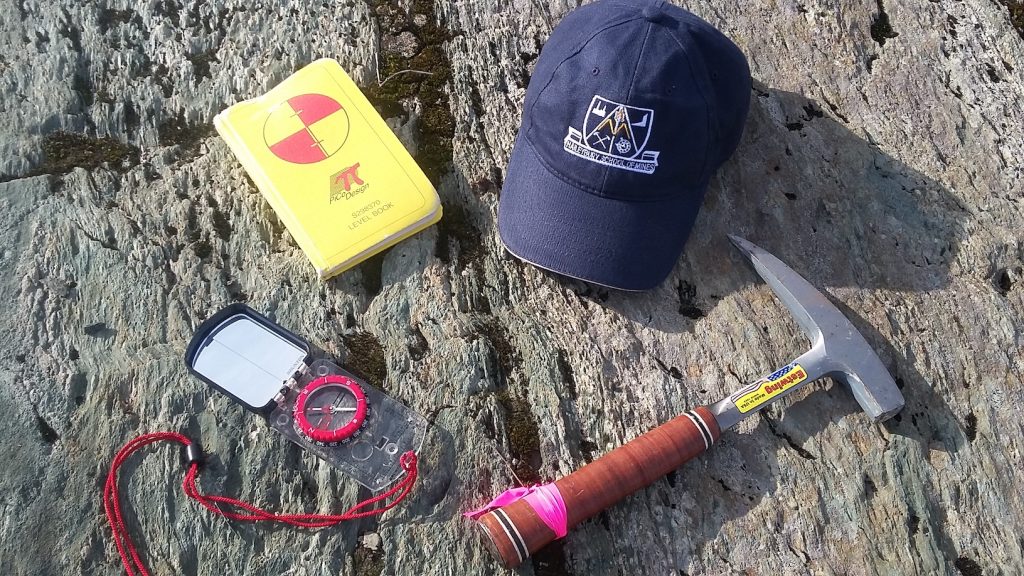
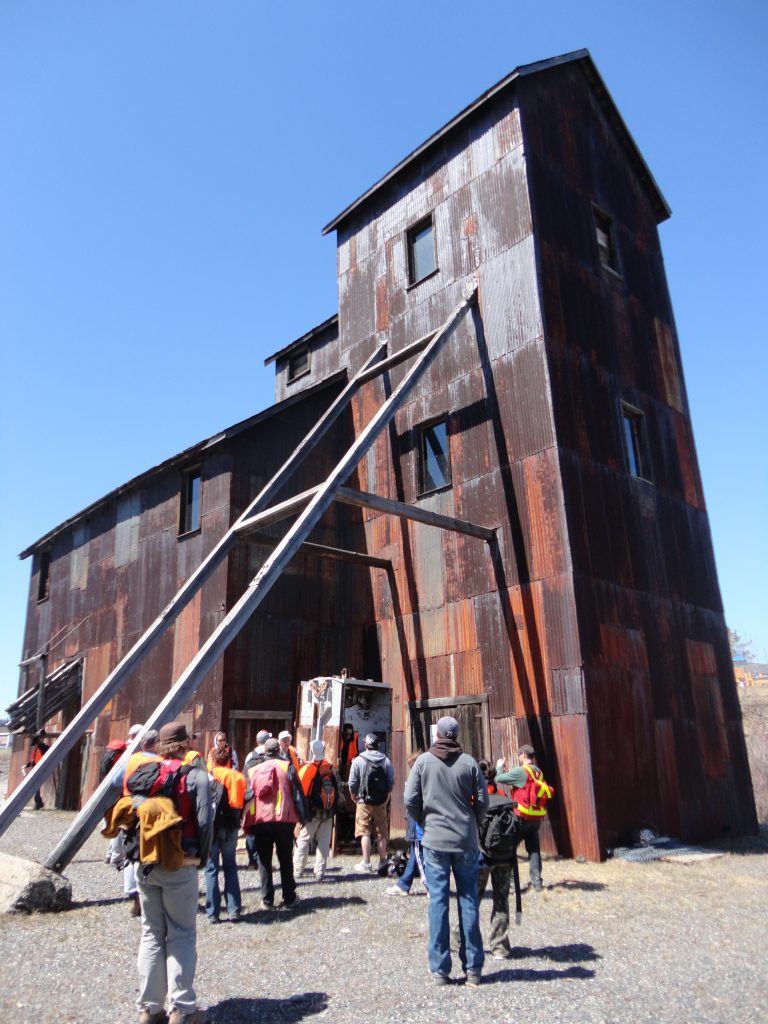
The Haileybury School of Mines started our program in 1912 due to the historic silver boom in nearby Cobalt. It was the goal to train people to do all engineering technical work in the mines, and this has evolved to our current Mining Engineering Technician program with the same values and goals.
Northern College Haileybury School of Mines has more operating mines and mills, and more variety in economic geology in a 220 km radius than any other community in Canada! The Haileybury campus is home to an extensive rock and mineral collection, and hosts the Rock Walk Park with over 200 samples larger than 2 tons in size. The college uses its extensive network of alumni and industry partners to ensure the latest technology is taught and available for hands-on learning of the required skills.
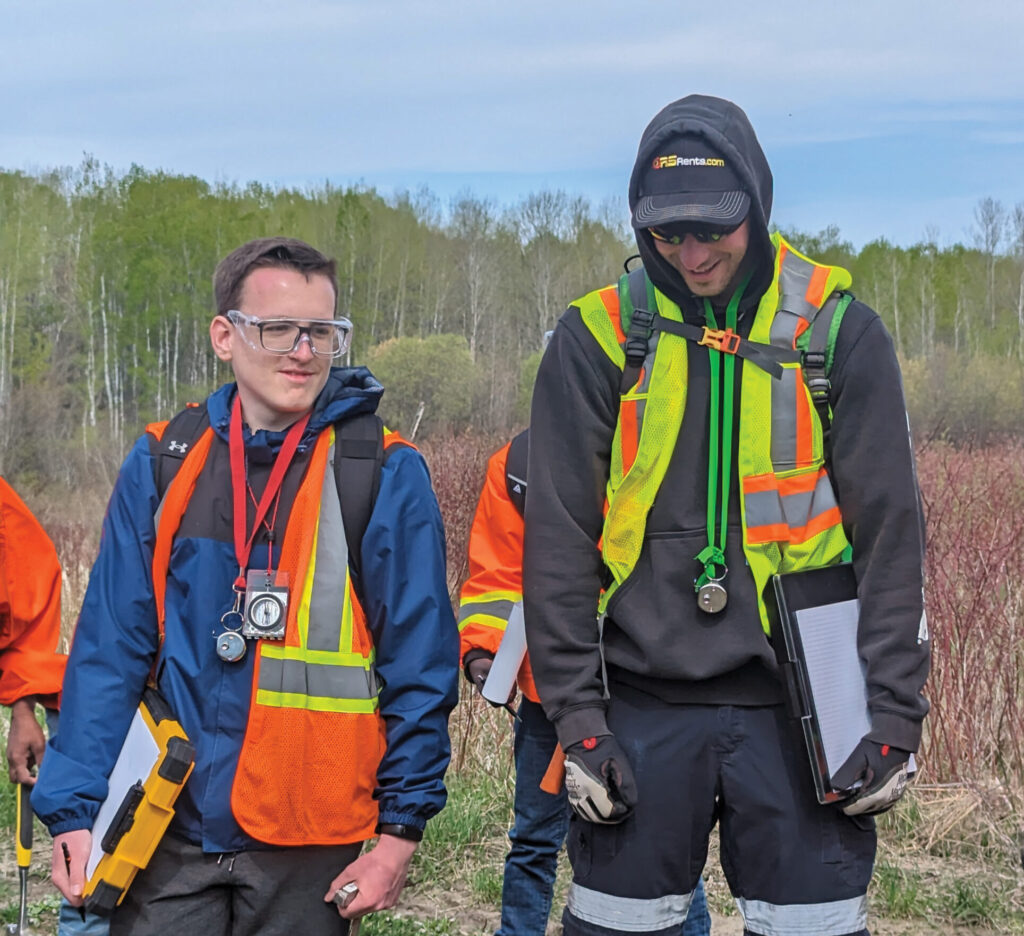
Northern College Haileybury School of Mines has a diverse mix of students. Our students include those coming directly from high school and looking to earn big money in a couple of years when they graduate, and those who have been in the industry as miners or supervisors and looking to advance their careers as managers or corporate leaders. The Northern College Mining Engineering Technician program currently leads all Canadian mining programs in female participation with 36% female students.
Graduates of the Northern College Haileybury School of Mines Mining Engineering Technician Program have careers that take them around the world: literally. Many alumni have worked in mining on 6 or more continents in their careers. You can have a solid job with excellent salary and benefits by working at a mine in your community. 100 % of our Mining Engineering Technician program graduates obtain jobs in the mining industry.
Admissions Information & Requirements
Admission Requirements
- Ontario Secondary School Diploma (OSSD)
- Grade 12 English (C, U)
- Grade 12 Math (C, U) (MCT4C preferred; MAP4C is accepted with a minimum GPA of 60%)
- Grade 12 Chemistry (C, U) is recommended)
- Grade 12 Physics (C, U) is recommended
Or equivalent

Academic prerequisites for this program may be obtained free of charge through Academic Upgrading.
For more details, please contact the Admissions Office at 705-235-7222 or admissions@northern.on.ca.
Additional Requirements for International Students
In addition to the admission requirements, international students must have proof of English Proficiency and meet the requirements below.
1. Proof of Senior High School Diploma/Certificate
2. English Proficiency (we will require one of the following):
- IELTS Academic International English Language Testing System: a minimum overall score of 6.0 must be achieved with no individual band score under 5.5
- TOEFL (Test of English as a Foreign Language) – Internet Based Test (iBT) overall minimum score of 79
- PTE (Pearson Test of English) Academic – Graduate Diploma: 58+
- Duolingo: 105+
If your country of citizenship has English as its official language, we may accept alternate proof of English Proficiency.
All educational documents must be submitted in English and will be dependent on the country of citizenship.
For more information, please contact admissions@northern.on.ca.
Program Specific Requirements & Additional Information
Work Integrated Learning Opportunities
N/A
Articulation / Transfer Agreements
A number of articulation agreements have been negotiated with universities and other institutions across Canada, North America and internationally. These agreements are assessed, revised and updated on a regular basis. Please contact the program coordinator for specific details if you are interested in pursuing such an option. Additional information can be found at Articulation Agreements.
Graduation Requirements
32 Program Courses
2 Communications Courses
3 General Education Courses
Graduation Eligibility
To graduate from this program, a student must attain a minimum of 60% or a letter grade of CR (Credit) in each course in each semester unless otherwise stated on the course outline. Students should consult departmental policies and manuals for additional details and exceptions.
Graduation Window
Students unable to adhere to the program duration of two years (as stated above) may take a maximum of four years to complete their credential. After this time, students must be re-admitted into the program and follow the curriculum in place at the time of re-admission.
Tuition, Fees & Payments
The tuition and fees information is typically updated yearly for the upcoming Academic Year in May. The amounts are for the full academic year.
Amounts may be based on last years tuition and fees and are subject to change.
If you are a current student, please refer to your Student Account or see a Student Services Clerk for the most up-to-date information.
Tuition
Domestic: $2,774.97
International: $15,715.60
Ancillary Fees
Ancillary fees vary by campus and support aspects of your experience as a Northern College student, such as Student Associations, Athletic Facilities, and Health Benefits.Ancillary fees are paid in full for the entire academic year in the first semester.
Please see Detailed Ancillary Fees for more information.
| Ancillary Fees by Campus (2026-27) | Domestic | International |
| Haileybury (HL) | $1,008.50 | $1,686.00 |
| Timmins (PC) | $983.50 | $1,661.00 |
Program Specific Fees
Co-Op Fee: $300.00Find Your True North.
At Northern College, you’re a part of a community.
From your teachers to support staff and administrators, we are all here to help you get an education and make some lasting connections along the way.
Your success is incredibly important to you, so we provide student supports to help you achieve your goals. From study assistance and accessibility services to mental health supports and financial aid, we’ve got you covered.
Each of Northern’s campuses boasts exercise facilities, a gym, cafeteria, study areas and a library – places that you can go to help keep you focused as you work your way through your studies. The communities we call home are incredible places, filled with amazing people and things to do.
“I chose Northern College because, based on testimonials from previous employers, friends and colleagues, that the Haileybury School of Mines (HSM) at Northern College has a world renowned reputation for producing high quality, well educated graduates with a high rate of employment. I have 5 or 6 family members and a handful of friends who have attended Northern College at various campus’ and they all agree the education they received is comparable to some of the top universities that also offer the programs Northern offers. Which I am learning through my course is absolutely correct. I highly recommend Northern College.”
– MacKenzie-Adam Armstrong, Distance Learning, Mining Engineering Technician
Does Northern College sound like a good fit for you?
Here’s how to take your first steps on your new exciting and rewarding career path.